
If orchestras have personalities, then Pasadena Symphony Music Director Brett Mitchell has found his groove with the musicians. Beginning his third season on Oct. 24 at Ambassador Auditorium, he presided with his usual relaxed, avuncular manner over an attractive concert that the orchestra performed with enthusiastic gusto and a little bit of raggedness.
For each of its subscription concerts, the Symphony performs the same program twice on a single Saturday, at 2 p.m. and at 8 p.m. This requires considerable energy and concentration from both musicians and conductor, but they did not (for the most part) sound fatigued for the evening concert. Perhaps repeating the repertoire in quick succession provides the opportunity to make adjustments.
American composer Joan Tower, still very much alive and creative at age 88, wrote Made in America, based on the anthem “America the Beautiful,” for a special commissioning program aimed at promoting small-budget orchestras. The Glens Falls Symphony Orchestra of New York gave the premiere in 2005.
To get the audience in the right mood for the piece, Mitchell coaxed them into singing this popular patriotic paean, with lyrics by Katherine Lee Bates written after an inspiring visit to Pikes Peak. In 1910, her verses were set to a hymn tune composed in 1883 by Samuel A. Ward.

In what she calls the “musical struggle” of creating Made in America, Tower uses fragments of the anthem as a framework but never states the tune in full. In a kind of theme-and-variations structure, she defamiliarizes the tune, challenging it with “other more aggressive and dissonant ideas that keep interrupting, unsettling it …. Perhaps it was my unconscious reacting to the challenge of how do we keep America beautiful.”
Days before the midterm elections both Mitchell and the orchestra approached Tower’s piece with commitment and enthusiasm.
In typically ebullient fashion, Mitchell introduced Samuel Barber’s beloved Violin Concerto as “the most beautiful piece of music ever written.” Okay, maybe one of the most beautiful ever written. Initially overlooked, Barber’s concerto has become an audience favorite, with its soaring, lyrical themes and neoromantic passion.
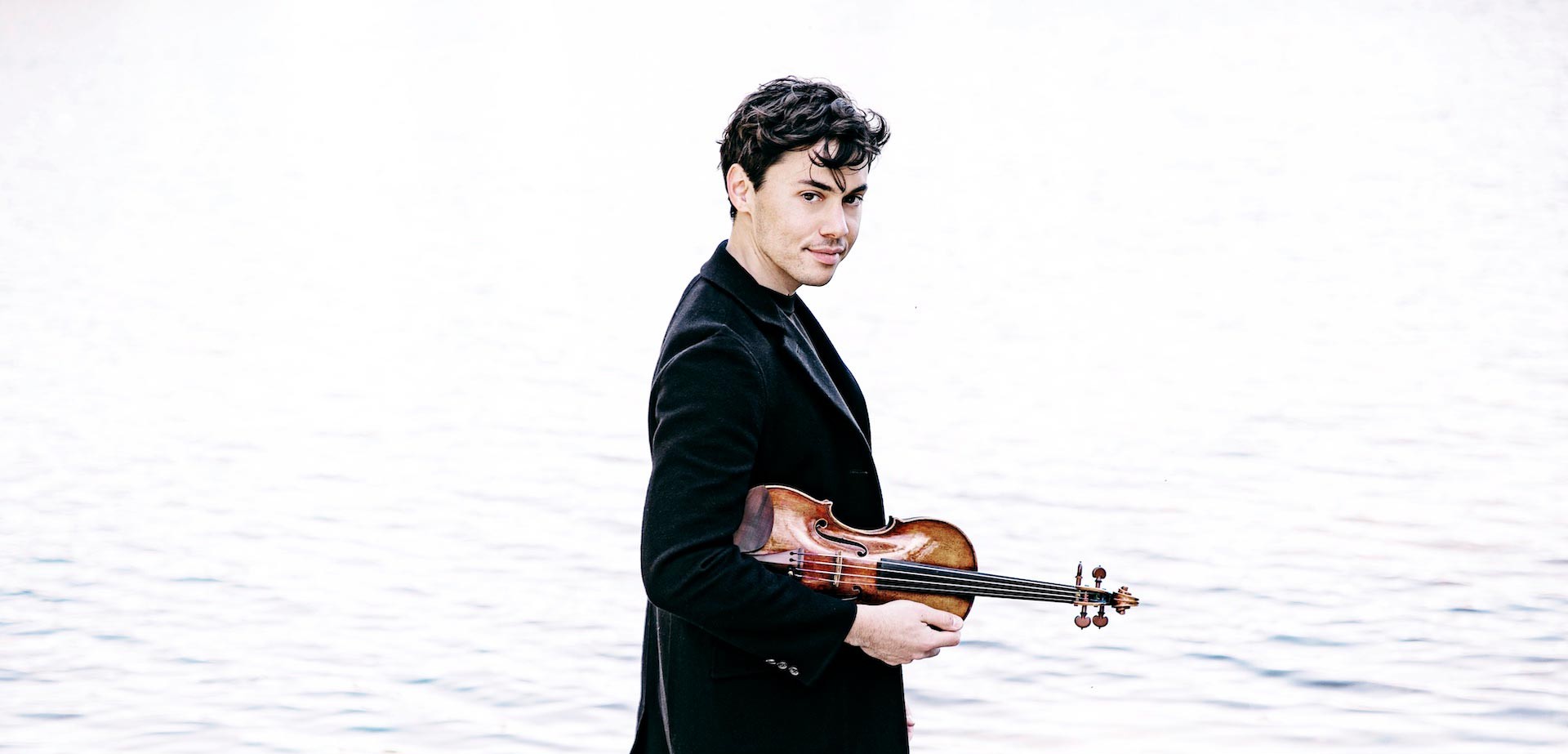
American violinist Benjamin Beilman, 36 years old and the recipient of many awards and fellowships, played the solo part with clear, sweet tone and impressive poise. He penetrated to the concerto’s emotional core without indulging in sentimentality. His phrasing was beautiful, with well-placed pauses and rubato. Mitchell led the orchestra with subtlety and control, giving the soloist all the freedom he needed.
Responding to the robust ovation, Beilman returned to the stage for an encore: the virtuosic Presto finale from Eugène Ysaÿe’s Violin Sonata No. 4 in E Minor, Op. 27, written for Fritz Kreisler. His charismatic performance was as captivating as his concerto work.

Intimidated by the legacy of Beethoven, Brahms took more than 20 years to complete his First Symphony, which finally premiered in 1876. But what Brahms created is very different from Beethoven, more lyrical and mellifluous, less driven and aggressive.
Mitchell conveyed his affection and respect for the work, but his orchestra was not always up to the task. While the strings played competently for the most part, except in a few unison passages, the brass struggled with many of the exposed passages, especially in the last movement.
A bright spot, however, was the eloquent playing by principal oboist Lara Wickes, who illuminated her solos in the second movement with tender accuracy and pastoral calm.
The evening concert was fairly well attended, but in a notable change, this season the Symphony has reduced the number of subscription concerts it will present from six to five.